It is the first week of November, the leaf crowd has gone home, and the taproom is quieter on weekdays. That is when the owner of a small brewery finally sits down with the paperwork that piled up in October: the event calendar, the private event inquiries, the distributor reorders, and the label for the winter beer that has to be ready before the holidays.
Most of that work is writing and remembering. It is a good fit for AI, as long as the right things stay with people.
Where the hours go
In a brewery with a taproom and a few wholesale accounts, the same small jobs repeat every week. Say the owner and one taproom manager spend eight hours a week between them on calendars, messages, reminders and label prep. (That figure is illustrative, but most owners will recognize the shape of it.)
None of those jobs is hard. They get done late because brewing, cleaning and serving come first.
What AI drafts well
An AI assistant is good at turning facts you already have into clean first drafts. Here is where that fits in a brewery:
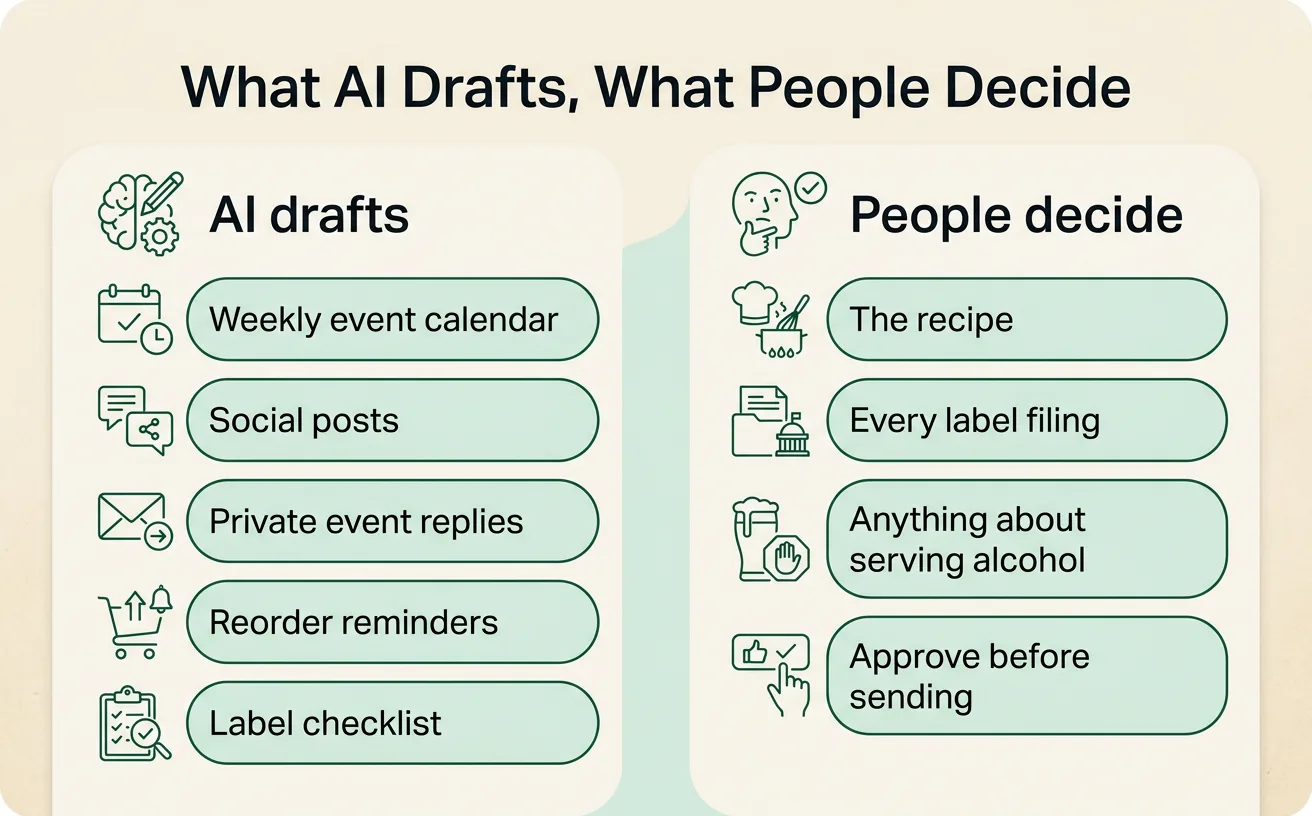
- The weekly event calendar and social posts. Give it the trivia night, the food truck schedule and the new pour, and it drafts the week's posts and the calendar text in your voice.
- Replies to private event and mug club questions. Group sizes, room availability, how the mug club works, when mugs are ready. It drafts the reply from your written answers.
- Reorder reminders and order confirmations. For the distributor and the bars and restaurants that carry your beer, it drafts a nudge when an account is due and a confirmation when an order comes in.
- First drafts of label copy and beer descriptions. You supply the style, the hops, the story. It gives you three versions to cut down.
- A label checklist. For each new label, it lists what needs to be gathered before you submit for federal label approval: the beer's details, the artwork, the required statements. It reminds you of the steps. It does not decide that anything is compliant.
What people still decide
The agent drafts, looks up and pre-fills. A person approves before anything leaves the building. In a brewery, some decisions are never handed off:
- The recipe. What goes in the tank and what the beer tastes like is the business.
- Every label and regulatory filing. The checklist helps you prepare, but the owner reads the label, checks it against the federal and state rules, and signs the submission. If you are unsure about a requirement, ask the agency or a qualified advisor. We do not give regulatory advice.
- Anything about serving alcohol. Who gets served, who gets cut off, age checks and what to say to a guest who has had enough stay with trained staff on the floor. A drafted reply never promises that a group will be served.
- Commitments and money. Deposits for private events, pricing for accounts and delivery promises get a person's yes first.
In practice, drafts land in a folder or inbox. The manager reads, edits and sends. For a private event inquiry, that might be a two-minute review instead of a twenty-minute write.
Keeping your information in-house
Recipes, account lists and pricing are worth protecting. A short written rule about what goes into an AI tool helps, and our post on a one-page AI policy is a place to start. If you would rather keep everything on your own hardware, private AI hosting is an option.
A small first step: the top ten questions
Before buying or building anything, spend one afternoon on this:
- Look back at last week and list every question the taproom staff answered by phone, text, email or social message.
- Group the repeats. Hours, dog policy, kids, food, parking, private events, mug club, growler fills, distribution, "is that beer still on?"
- Write the top ten answers down in plain sentences, the way you want them said.
- Mark any answer that needs a person every time, such as pricing or event deposits.
That page does three things. It trains new staff. It becomes the source an AI assistant drafts replies from. And it shows you which job to map first, which is the same idea as in mapping one job before buying a tool. If you want a hand with that, we use a workflow map on discovery calls.
If your staff would use the tools better with some practice, team training is where we usually begin.
What to try first
Pick the private event inquiries. Write the top ten answers, add your event room details and rules, and have an AI assistant draft replies for the manager to review for two weeks. Keep a count of how many needed changes and why. If it saves the hours and the replies sound like you, move to the weekly calendar next. Leave the label work for last, and keep it as a checklist the owner owns.
If you want help picking the first job, book a planning call. It is 30 minutes and free.