
The North wing of New Boston Central School is heated by two propane boilers from 1986 and 1991. The district's own 2026 evaluation found corrosion, flame rollout, leaks and failing pump seals. That makes the heating plant one of the first things voters will be asked to fund.
We're based in New Boston, and this post doesn't take a side on any loan or warrant article. It suggests one way to look at the numbers before the vote.
What the evaluation says
EMC's Comprehensive Evaluation (November 2025) and the district's estimate sheet (September 2026) are both posted on sau19.org. The evaluation sorts the building's needs into three tiers. Priority 1 means "consider within 0 to 2 years", for items with a high chance or high cost of failure.
Both heating plants are Priority 1. The North plant is the two propane boilers above. The South plant has two oil boilers from 2000 with failed gaskets, and the plan converts it to propane.
The rest of Priority 1 covers:
- domestic hot water
- rooftop air handlers and heat-recovery units
- building automation
- windows
- re-piping the heating loop so each room gets its own thermostat
- a standby generator sized for the whole building, with an automatic transfer switch (the current one is undersized and switched by hand)
- a septic study, because the records for the old leach fields conflict and a 1987 field is likely still in use
The thermostat item fixes a daily complaint. Several rooms share one thermostat today, so the rooms without one can't set their own temperature and tend to overheat. Staff and maintenance have raised it.
Some items are Priority 2, meaning two to four years out. The biggest for heating is extending the school's existing VRF heat pumps to the 12 rooms and the portable classrooms they don't reach. Insulation, air sealing and roofing are Priority 2 as well.
Why the order of the work matters
Replacing failing boilers first is a normal engineering sequence. It also means the new plant is sized for the building as it is now, before the insulation, air sealing and wider heat pump coverage in Priority 2.
A plant sized before that work can end up bigger than the building needs once it's done. The 12 rooms and the portables also wait another budget cycle for heat pumps.
Both of those may be acceptable. They should be chosen on purpose, with the other orders priced next to them. The board and voters need to know which mix of work lowers the risk of a mid-winter failure without paying twice for heating equipment.
What AI can do for a volunteer board
School board and budget committee members read these documents in the evenings, mostly without an engineering background. An AI assistant can do the comparison work with the numbers the district has already published. It can:
- read the evaluation, the estimate sheet, utility bills and the floor plan, then lay out two or three options with the same assumptions: the plan as scoped, the plant plus the VRF extension done sooner, and a phased plan by wing
- write a one-page summary of each option for Town Meeting: what's at risk if the town waits, what gets fixed, what's left for later, and every assumption stated
- list questions for the engineer and the utility before the vote: equipment size if the envelope work comes first, electrical capacity for more heat pumps, available rebates, and whether the new generator should cover the VRF system and portables (the evaluation lists that as an open decision)
- keep the capital plan current by adding each year's work orders and bills and updating the priority list
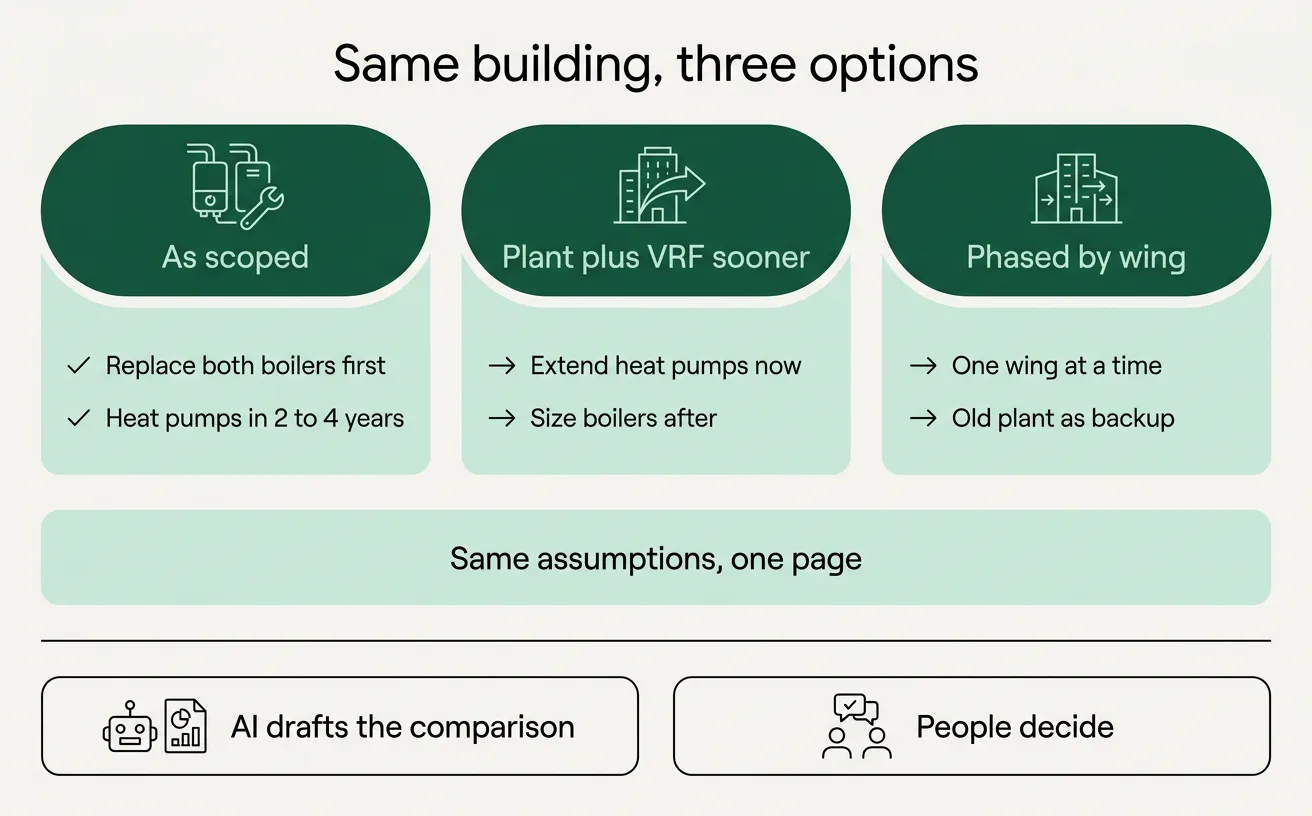
A custom AI agent set up for this one project could do all of that. It should only use the district's documents, and every number it shows should point back to a line in the evaluation or the estimate sheet.
People keep the decisions. The engineer designs and stamps the work, the board makes its recommendation and the voters decide. The AI drafts comparisons and questions. It doesn't size equipment or recommend how to vote.
We follow the same rule on other town projects. When we built a chatbot for a small town website, it could only answer from the town's own documents. Our post on town office workflows works the same way.
A first step
Before the warrant language is final, ask for one page that puts the options side by side, with every assumption written out. Then check it against the EMC evaluation line by line. The board would have it in hand before Town Meeting.