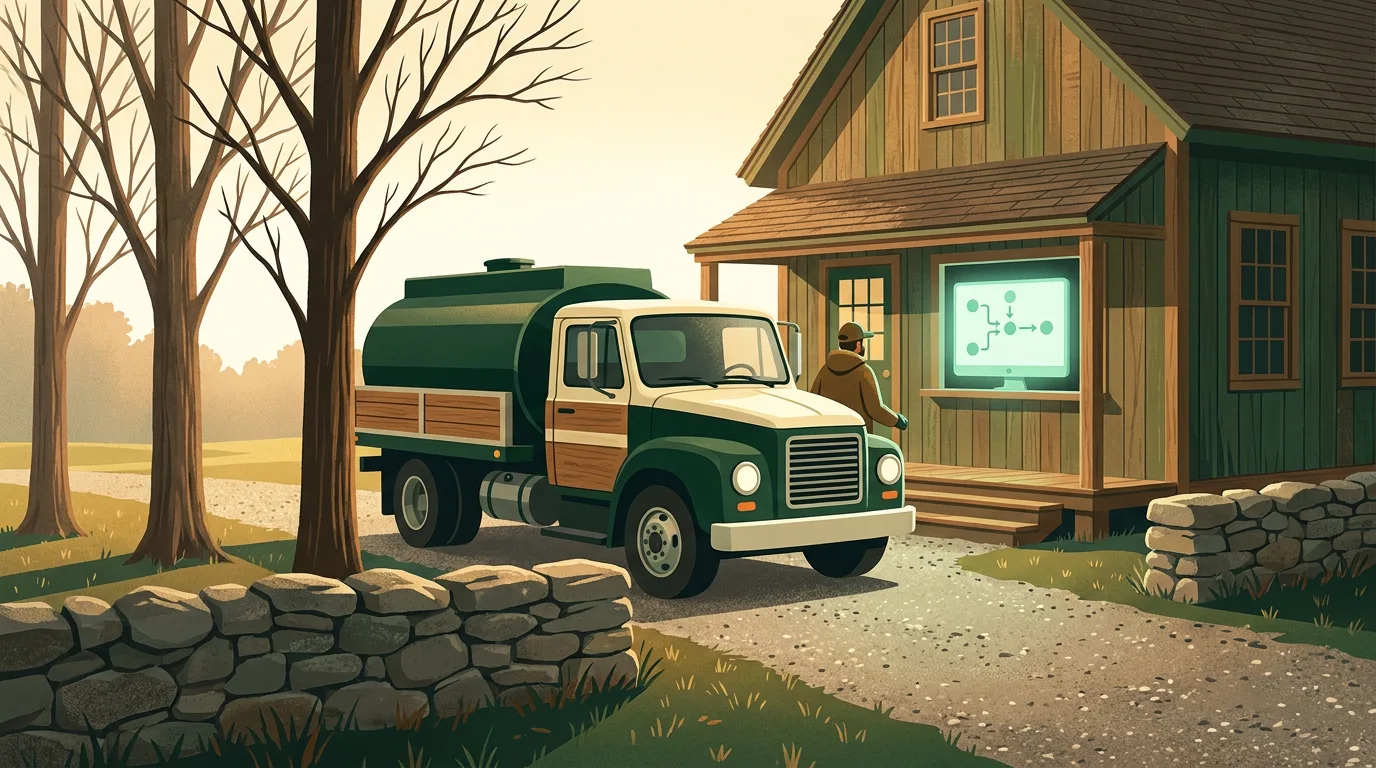
It is a Friday afternoon in late November, the forecast says single digits by Saturday night, and the phone at a family oil dealer in Merrimack County starts ringing. Most of the callers are will-call customers who glanced at the gauge on the way to the car and saw it near the bottom. Some of them are already out.
Most of your customers are probably on automatic delivery, and those tanks take care of themselves. The will-call group is smaller, but it generates the calls that fill your Friday and sometimes the ones that end in a cold house.
Why will-call customers run out
A will-call customer decides when to order, and the decision depends on checking a gauge that is often in a basement corner or behind a boiler. People forget, or they figure it will last until the next paycheck. Then the cold weekend arrives and everyone calls at once.
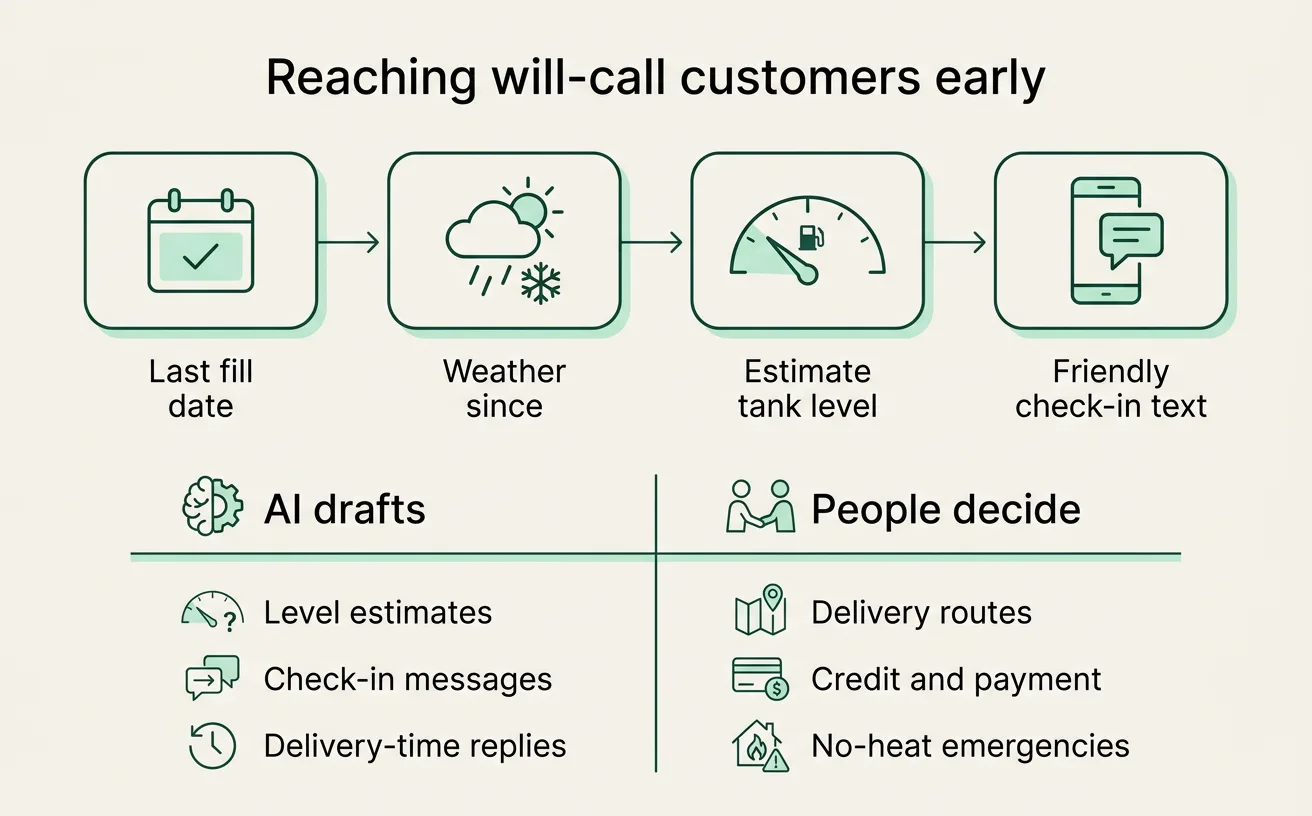
Your office already knows more than the customer does. You have the date and size of the last fill, and you know how cold it has been since. That is most of what you need to guess where the tank stands.
What AI is good at here
Heating demand tracks degree-days, a measure of how many degrees below a baseline each day's average temperature falls. If you have each customer's last fill, tank size and a rough burn rate from past seasons, an AI assistant can add up the degree-days since delivery and estimate how much is left. It will not be exact, but it can sort 150 will-call accounts into “fine,” “getting close” and “check on this one today.” (If you want to brush up on how the equipment side works, our oil boiler guide covers the basics.)
From that list, it can draft the messages your office would otherwise write by hand:
- A check-in text or email. Something like “Hi, based on your last delivery and the cold this month, you're probably near a quarter tank. Want us to put you on the schedule?”
- Replies to “when can you come?” The assistant looks at the route schedule and drafts an answer, such as “We're in your town Tuesday and Thursday. We can pencil you in for Tuesday.”
- An invitation to switch to automatic delivery. Sent to the customer who has just called three times this winter, it reads as helpful rather than pushy.
Where a person stays in charge
The estimates are guesses. A tank in a drafty farmhouse burns differently from one in a tight new build, and a wood stove or a vacant week changes everything. Your dispatcher should treat the list as a prompt to look closer, not as a gauge reading.
Three things stay with your people:
- Delivery routes. The assistant can suggest who is close to empty, but your dispatcher knows which road is washed out, which driver is on, and which hill is bad after an ice storm.
- Credit and payment. Whether to deliver to someone with an unpaid balance is your decision, and it often depends on a history the owner knows personally. The assistant can pull the balance. It should not decide.
- Every no-heat emergency. If a customer writes or calls to say the house is cold, the tank is empty or the boiler has stopped, that goes straight to a person, immediately. Set the system to recognize those words and hand off without drafting a reply first. Elderly customers and homes with small children are a reason to be especially careful here.
Anything the assistant drafts should be read by someone in the office before it goes out, at least until you trust the wording. The same goes for any message that promises a delivery date, since that is a commitment.
What this looks like in a week
Say your office spends six hours a week fielding will-call phone calls in December, and four of those hours come in the two days before a cold snap. If a check-in text goes out the Monday before, some of those customers order early and the Friday rush spreads across the week. You will still get calls, but fewer of them will be urgent.
The automatic-delivery invitation works on the same logic. Each customer who switches is one less guess to make every cold week, and you still choose whom to offer it to. Some people prefer will-call for budget reasons, and that is fine.
If you want a staff member or two to get comfortable with the tools first, our AI team training is built for that. If customer account data worries you, we can also keep the system on private hardware so nothing leaves your control. Our post on the first cold snap covers the phone side of a similar rush.
A first step for this month
Before touching any software, pull the will-call customers who ran out last winter. For each one, write down the date of the last delivery before they ran out, and count the days between that delivery and the emergency call.
You will probably see a pattern: maybe most of them ran out somewhere between five and seven weeks after a fill, or in the first cold week of January. That number is your trigger. It tells you when a check-in text should go out, and it takes an afternoon with a spreadsheet and a cup of coffee.
Once you have the list, we can help you turn it into a simple weekly check-in routine. If you would like to talk it through, book a planning call for a free 30 minutes.