How an oil boiler and baseboard heat work
A lot of New Hampshire houses still heat with an oil boiler in the basement and baseboard along the walls. Watch the thermostat call and the burner light, drop the outside temperature, then break it and learn what the red reset button is really for.
Right now
- Room
- 67.7°F, set to 68°F
- Burner
- Off
- Boiler water
- 150°F
- Circulator
- Off
- Pressure
- 14 psi
- Oil at this temperature
- About 5.8 gal a day, 26 days left
Last 2 hours
A minute every second
What the boiler just did
Clock 0:00
- Waiting for the thermostat to call.
Heat carried by hot water.
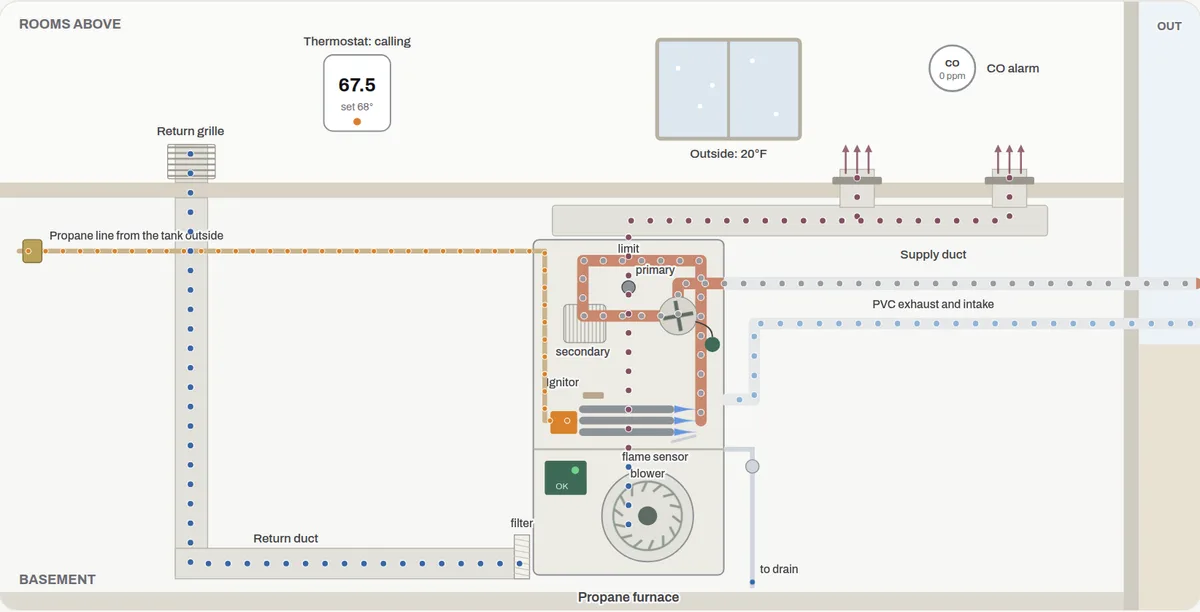
A boiler heats water and a small pump moves it through the house. It's quiet and even, and there's no ductwork. The same few parts, in the same order, run every time the house needs heat.
- 1
Thermostat
Calls for heat when the room cools below the setpoint, which starts the circulator and lets the burner run.
- 2
Burner
Sprays a fine mist of oil and lights it. A light sensor has to see the flame within seconds or the burner shuts down.
- 3
Boiler
Heats the water in its cast-iron sections to about 180°F, then the aquastat stops the burner until the water cools again.
- 4
Baseboard
Hot water runs through finned pipe along the walls. Air rising through the fins carries the heat into the room.
Press reset once.
When the burner can't prove a flame, the primary control shuts the oil off and pops its reset button. It's telling you something is wrong: no oil, a clogged nozzle, a dirty sensor. Pressing reset tries again, and every failed try sprays more oil into the chamber.
Check the tank gauge and the thermostat first, then press reset once. If the burner doesn't start and stay running, call for service. Enough unburned oil in a hot chamber can light all at once, a puffback that fills the house with soot. Many controls stop accepting resets after three tries for this reason.
How long a tank lasts.
A 275-gallon tank can last a month or more in the fall and barely two weeks in a January cold snap. Oil use follows the weather almost exactly, which is how automatic delivery works: the dealer tracks the degree days since your last fill and comes before you run low.
Running dry is more trouble than a late delivery. The burner locks out, the oil line fills with air that has to be bled, and sludge from the bottom of the tank can clog the filter and nozzle.
Six common no-heat calls.
The first questions sort most of them: is the burner running, is the boiler hot, and are the pipes to the baseboard hot. Pick one to watch it happen and see the chart change.
Out of oil
"We have no heat and the red button on the burner is popped up."
The tank runs dry, usually on the coldest night. The burner starts, sprays nothing, and the primary control locks out because it never sees a flame. Even after a delivery, air in the oil line can keep it from lighting until the pump is bled.
Clogged nozzle or filter
"It's been running a lot but the house won't warm up. Now it's stopped and there's a smell of oil smoke."
Sludge from the tank or a worn nozzle chokes the oil spray. The flame is small and smoky, soot builds up in the boiler, and eventually the flame sputters out and the burner locks out.
Dirty cad cell
"The burner starts, runs for a few seconds, then quits and the reset light is on."
The cad cell is an eye that watches for the flame. When soot covers it, the burner lights but the control can't see the flame, so it shuts the oil off and locks out anyway.
Dead circulator
"The boiler is roaring and hot, but the baseboards upstairs are cold."
The circulator pump moves the hot water out to the baseboard. When its motor or coupling fails, the boiler gets hot and cycles on its high limit all night, but the hot water never leaves the basement.
Air in the baseboard
"One room stays cold and the baseboard makes a gurgling, rushing water sound."
Air gets into the pipes after a repair or through a leaky fitting and collects at the high points. The water can't flow through the air pocket, so part of the house stays cold and the pipes gurgle.
Waterlogged expansion tank
"There's water on the floor by the boiler, and it's coming out of that pipe on the side."
Water expands as it heats, and the expansion tank's air cushion makes room for it. When the tank waterlogs, the pressure shoots up every time the boiler heats, and the relief valve opens at 30 psi and dumps water on the floor.
Where AI helps the office and the trucks.
An oil company runs deliveries and service from the same office, and both get busiest on the same cold nights. Keeping every tank filled and sorting the no-heat calls quickly is where software can take some of the load.
Deliveries planned from the weather
Oil dealers already estimate each house's use from degree days. An agent keeps those estimates current from past deliveries, flags the houses that will run low before the next cold snap, and drafts the route.
Custom AI agentsNo-heat calls sorted before a truck rolls
Intake asks what the tank gauge reads, whether the thermostat has power, whether the reset button is popped and how many times it's been pressed. An empty tank goes to delivery, a dead thermostat battery gets fixed on the phone, and a locked-out burner gets a tech.
Custom AI agentsCleaning reports and follow-ups
The tech records the combustion numbers and what they replaced, and AI drafts the report for the customer and flags what to watch next year, like an aging expansion tank or a tank showing rust.
AI Cowork training
This page shows a typical oil-fired cast-iron boiler with one zone of baseboard, simplified for learning. The temperatures, timings and oil use come from a simple model, not any particular boiler. Keep a working carbon monoxide alarm near the boiler and on every floor, and have the burner cleaned and tested every year by a qualified oil burner technician.