
It is October, and the pantry director in a town of a few thousand has a foundation report due in three weeks. The numbers live in a binder of volunteer sign-in sheets, a spreadsheet someone started in March, and a folder of emailed notes from the Thursday distribution. She is the only paid person on staff, and the report is one of six things on her desk.
This is the situation at a lot of New Hampshire food pantries, land trusts and historical societies. The work being reported is good. Pulling it together into the funder's format takes the hours that could have gone to the work itself.
Where the hours go
Most of the time in a grant report is not thinking. It is gathering, sorting and retyping. Say a report takes ten hours, and six of them go to finding figures, matching them to the funder's questions and rewording last year's narrative.
The same material then gets reshaped for the board packet, the newsletter and the next application. Each version starts from scratch.
What AI is good at here
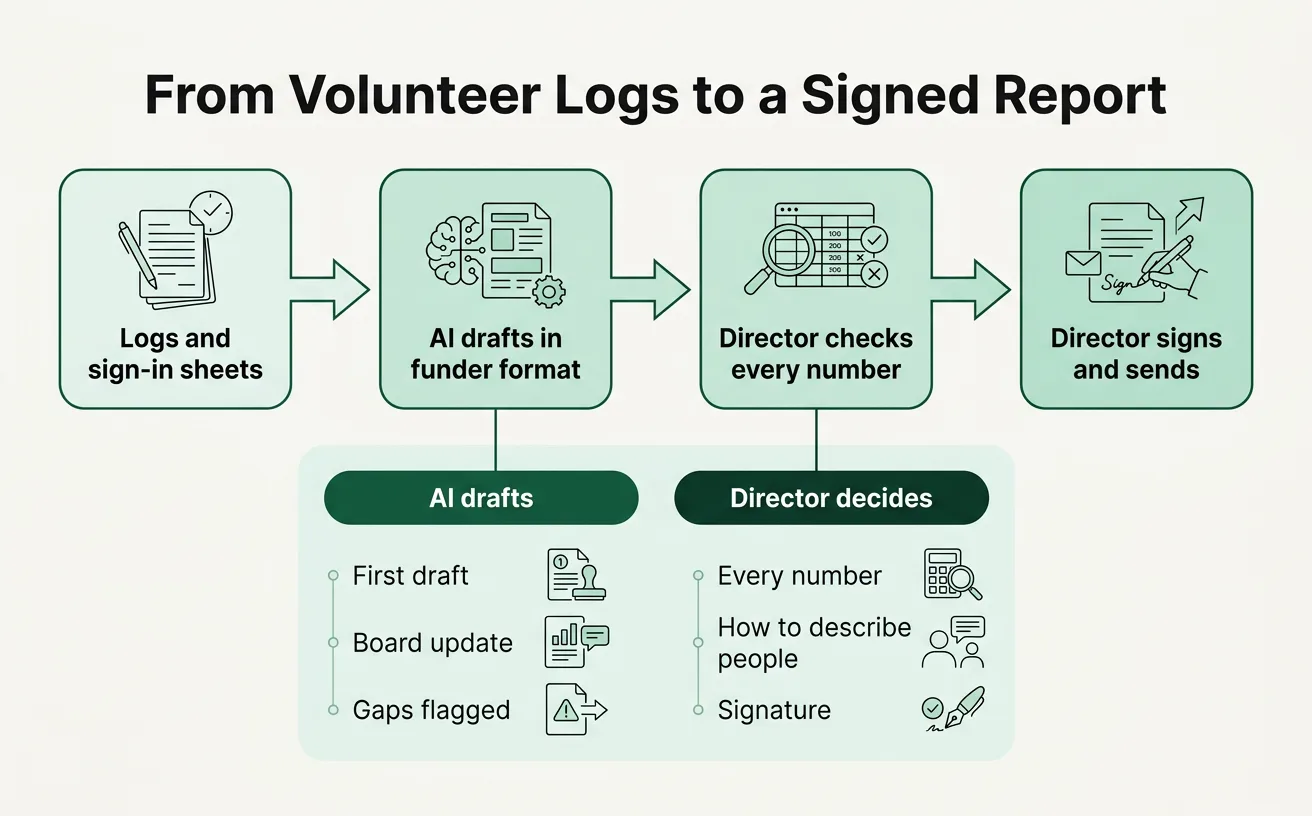
An AI assistant is good at turning scattered notes into a structured first draft. Give it the logs, the program notes and the funder's report template, and it can produce a draft that follows the funder's headings and word limits. It can also write the board update from the same material, in a shorter and plainer voice.
The useful part is the first draft in the right shape. A blank page is the slowest part of the job, and a draft with the sections already filled in is much faster to correct than to write.
It can also point out what is missing:
- A question in the template that the logs do not answer
- A month with no volunteer entries
- A figure that appears two different ways in two documents
- A goal from the grant application that the report never mentions
Where the director stays in charge
The director checks every number. AI can misread a handwritten tally, add a column twice or round something in a way the funder will notice. Anything with a figure in it gets traced back to the sheet it came from before it goes anywhere.
She also decides what to say about the people served. How a pantry describes its neighbors, or how a land trust describes a landowner's gift, is a judgment about dignity and about the relationship with the funder. A draft can offer wording. It does not know the family, the town or what the board would be comfortable seeing in print.
And she signs. Nothing goes out unsigned. The report is a commitment to a funder, and the person making that commitment should have read every line.
Keep client names out of the tool
Sign-in sheets and intake notes often contain names, addresses and circumstances. Those should not be pasted into a general AI tool. Before anything goes in, replace names with counts or initials, or work from the summary spreadsheet instead of the raw sheets.
If the pantry or society wants to draft directly from sensitive records, that is a case for private AI hosting, where the data stays on equipment the organization controls. For most small offices, anonymized totals and short program notes are enough.
What the draft needs from you
A good draft depends on what it is given. A short checklist helps:
| Give it | Why |
|---|---|
| The funder's report template | So it follows their headings and limits |
| Last year's accepted report | For tone and what the funder liked |
| This year's logs, with names removed | The source of every figure |
| The original grant application | So it reports against the goals you promised |
With those four, the draft usually needs corrections rather than rewriting. Staff and volunteers who will review drafts also do better with an hour of practice on what to check, which is the kind of thing our team training covers.
A review routine that keeps it honest
We suggest a fixed order. First, trace each number to its source and mark it. Second, read the narrative for anything that claims more than the logs show. Third, read every sentence about people served and rewrite it in your own words. Fourth, sign.
If the same report comes around every quarter, the routine can be written down and handed to a board treasurer for a second read. The agent drafts and flags. People verify and approve. If you want to see how a recurring job like this gets broken into steps, our Workmap shows how we map one on a discovery call.
A small first step
Take last year's grant report and this year's logs, with names removed. Give both to an AI assistant along with the funder's template, and ask for a draft of the next report. Then spend your usual time checking it, and note how many hours you saved on gathering and formatting.
Do it with one report, not all of them. Pick the one with the clearest template, and keep the director's review exactly as strict as it was before.
If you would like help setting that up for your organization, book a planning call and we will talk it through in thirty minutes.