Medicare open enrollment runs October 15 to December 7. For a two- or three-person agency in New Hampshire, that is about seven weeks of back-to-back calls with clients comparing plans, and the paperwork around each call doesn't shrink to fit.
Most of that paperwork is repetitive. The same confirmation, the same list of what to bring, the same explanation of why a premium or a formulary changed. That is the work AI can take off the agent's desk, so the agent's hours go to the conversations.
Where the hours go
Say each client appointment carries about 30 minutes of surrounding work: confirming the time, reminding them what to bring, reading the plan's notice of changes, writing up what was discussed, and following up. With a full calendar, that adds up to many hours a week that nobody bills for and nobody enjoys.
None of those tasks needs the agent's judgment. They need accuracy and a consistent voice, and that is where a language model drafting from your own material is useful.
What AI can draft
Appointment confirmations
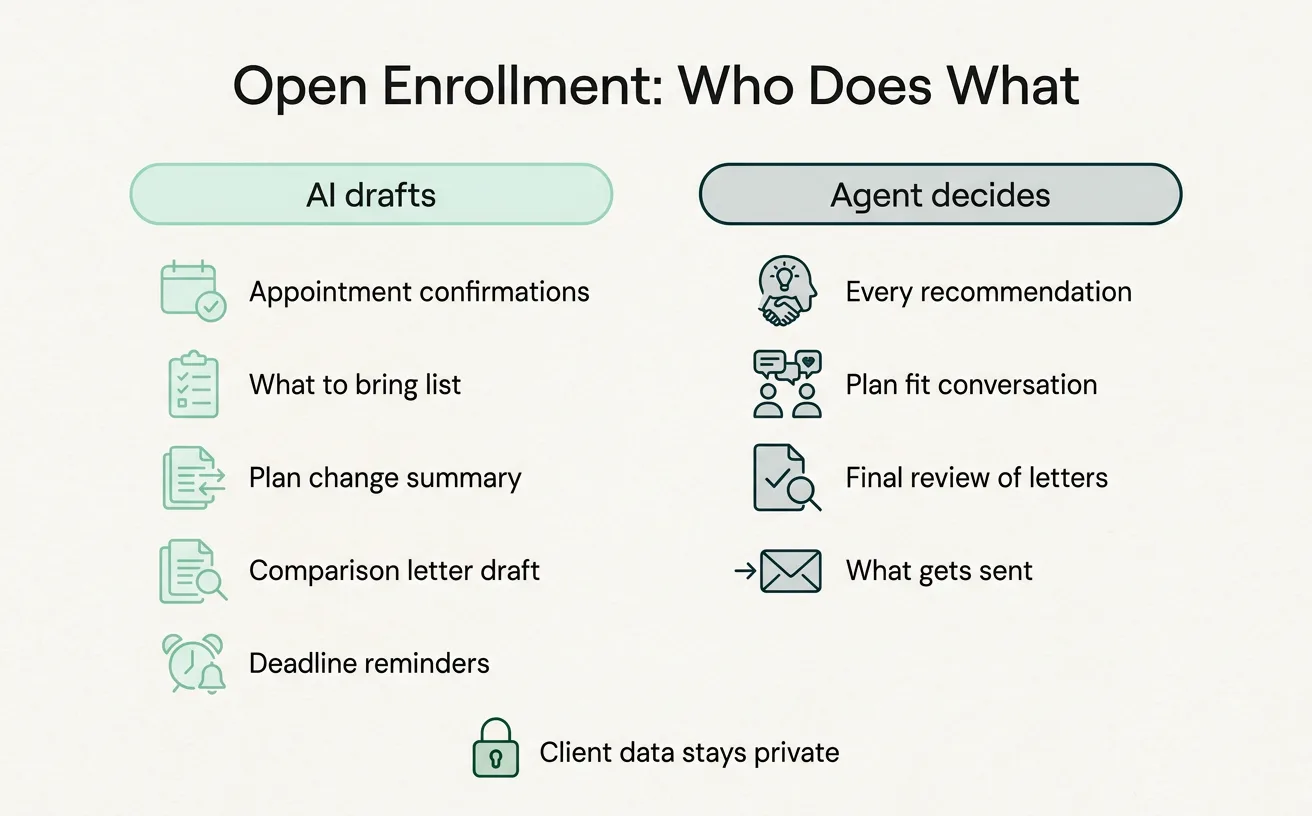
A confirmation that goes out the moment a slot is booked, with the time, how the meeting will happen, and a short list of what to bring: current drug list with dosages, preferred pharmacy, and the names of doctors and specialists they want to keep. Clients who arrive with those three things make for a shorter, better meeting.
A plain-language summary of what changed
Every client's current plan sends a notice of changes in the fall, and most people don't read it. An assistant can turn the agent's notes on that notice into a short summary: premium, deductible, drug tiers, network changes. The agent reads it against the actual document before it goes anywhere.
Side-by-side comparison letters
After a meeting, the agent has notes on the two or three plans discussed and why. AI can turn those notes into a clear letter laid out like this:
| Item | Current plan | Option A | Option B |
|---|---|---|---|
| Monthly premium | from the carrier documents | from the carrier documents | from the carrier documents |
| Client's drugs covered | from the drug list | from the drug list | from the drug list |
| Doctors in network | from the client's list | from the client's list | from the client's list |
The figures come from carrier documents the agent supplies, and the reasoning comes from the agent's own notes. The assistant organizes; it doesn't invent.
Follow-up reminders before the deadline
A client who said “let me talk to my daughter” on October 20 is easy to lose by December. A reminder drafted for each open conversation, timed ahead of December 7, keeps those clients from slipping.
What the agent still decides
Every recommendation and every conversation about which plan fits belongs to the agent. Whether a client should keep a favorite specialist, accept a narrower network for a lower premium, or stay put is a judgment about that person's health, budget and worries. It isn't a drafting task.
That also means nothing leaves the office unreviewed. The agent reads each letter and summary, checks the numbers against the carrier documents, and sends it. If a draft sounds more certain than the agent is, the agent changes it.
Keep client health information private
A drug list is health information. Names, medications, doctors and pharmacies shouldn't be pasted into a public chatbot, and an agency's policy should say so in plain words. Our one-page AI policy post is a starting point for writing that down.
For work that does involve client details, the tools should run where the agency controls them. That can mean private AI hosting so the data stays in-house. We aren't giving legal or compliance advice here, so check your carrier contracts and your own obligations for how client data may be handled.
A first step before October 15
You don't need a new system to start. You need a list.
- Write down the ten questions clients ask you every year. Think “Will my doctor still be covered?”, “Why did my premium change?” and “What happens if I miss December 7?”
- Draft one clear answer for each, in your own voice, in a few short sentences.
- Check each answer against current carrier and Medicare materials, since dates and rules change.
- Keep them in one document your whole team uses.
That document becomes the base for everything above: confirmations, summaries and letters all draw on your answers. If you want help turning it into a drafting workflow, we can map the workflow on a call, and team training gets your CSRs comfortable reviewing the drafts.
If the ten answers are written before October 15, the first week of calls goes noticeably easier. When you're ready to talk it through, book a planning call, 30 minutes and free.