
When the ticks come out in the Monagle Valley and along the Merrimack, the phone at a small-animal practice changes character. Owners call about a tick on the dog, a heartworm test, a flea and tick refill, and whether the boarding form is due before the Fourth of July weekend. Most of it is routine. A few calls are not, and they sit in the same voicemail box as everything else.
This post is about the routine part, and about keeping the other part in the hands of your staff.
What the front desk is carrying
Say a two-doctor practice in Hillsborough County has one person at the desk most of the day. Between checking in patients and taking payments, she is also returning voicemails, pulling vaccine records for groomers and campgrounds, and answering the same refill question a dozen times.
If that pile eats ten hours a week (an illustrative number), that is a quarter of a working week spent on typing that follows a pattern. The pattern is the useful part.
What AI is good at here
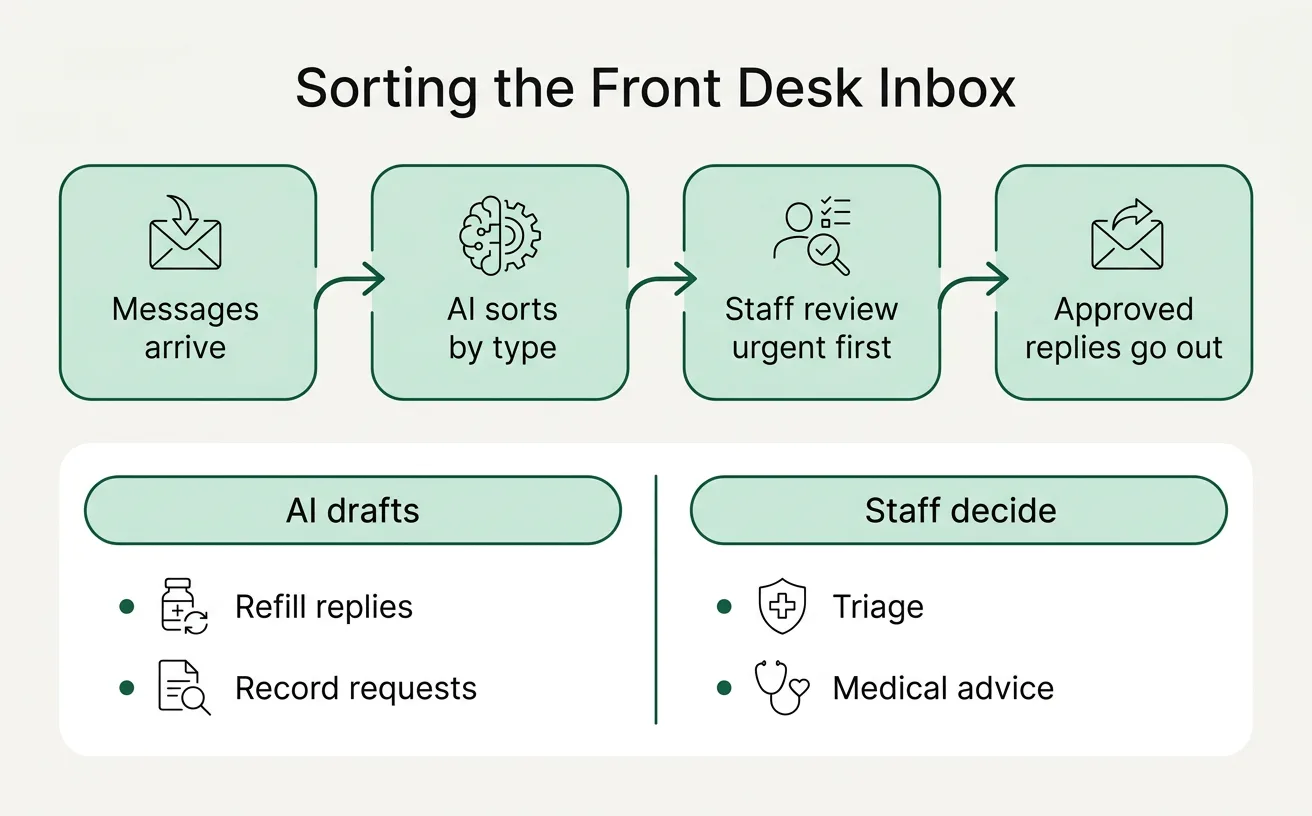
An AI assistant reads a message, recognizes what kind it is, and drafts a reply in your clinic's voice. It does not get tired at 4:45 on a Friday. Here is where it helps most:
- Routine replies. Boarding form questions, hours, “do you carry this food,” and “how do I get my dog’s records for the kennel.” The draft cites your actual policies, and staff read it before it goes.
- Reminders. Vaccine due dates, tick and flea preventive refills, annual exam nudges. The agent builds the list and drafts the message; a person approves the batch.
- Records requests. It can assemble a vaccine certificate request into a ready-to-send draft, pulling from the record, for a staff member to check.
- A first sort by urgency. Each incoming message gets a label: routine, needs a callback today, or possible emergency. Anything that mentions trouble breathing, a bloat-looking belly, a swallowed object or a bleeding wound goes to the top of the list with a flag.
That last item is a sort, not a decision. The label tells staff where to look first. It does not tell the owner anything.
Where a person stays in charge
Anything medical, and all triage, belongs to your clinical staff. “Is this an emergency?” is the hardest message a desk receives, and a language model does not know the animal, the history, or what the owner’s tone suggests on the phone. It can miss a message worded calmly about a serious problem, or flag a harmless one.
So we would set the rules like this:
| Task | AI drafts | Person decides |
|---|---|---|
| Refill or preventive reminder | Yes | Approves before sending |
| Vaccine record request | Yes | Checks the record |
| Boarding form reply | Yes | Skims and sends |
| “Is this an emergency?” | Sorts to top of list only | Calls back and triages |
| Anything about diagnosis or dosage | No draft to the owner | Vet or technician answers |
What the clinic tells an owner about their animal is always a staff decision. A refill that involves a prescription needs a veterinarian's sign-off, and the agent should never approve one on its own. If you want, the agent can pre-fill the refill request with the last visit date and the medication on file so the doctor sees it in one glance.
A simple standing rule also helps: any message the AI is unsure about goes to the urgent pile, not the routine one.
Keeping client records private
A clinic's records carry owners' names, addresses, phone numbers and their animals' histories. Before any tool touches them, ask where the data goes and who can see it. For some practices a standard business tool with the right settings is fine. For others, keeping it in-house matters, and that is what private GPU hosting is for: the model runs on infrastructure you control, and client messages do not go out to a third party.
Either way, the agent should see only what a task needs. A reminder draft needs a name, a pet and a due date. It does not need the whole chart.
Train the desk before you automate it
The people who use these drafts every day are the ones who will catch a wrong one. A short session on how to prompt, review and correct AI output does more than any tool. Our AI cowork training is built around a team’s own recurring tasks, so the desk practices on your actual refill and records messages. When a routine job is settled enough to hand off, a custom agent can take the first pass while staff keep the approval step.
A first step: count a week
Don’t change anything yet. For one week in tick season, take every voicemail and message that comes in and sort it into a few plain categories:
- Refills and preventives
- Vaccine records and forms
- Boarding and grooming
- Appointments
- Sick or worried owners
- Everything else
Tally each one. You will probably find that a few categories hold most of the volume, and that the sick-animal calls are a small share that deserves more of your attention, not less. That count tells you which one job to hand to AI first, and it gives staff a chance to say what they would never want a draft for.
The usual first pick is refill and vaccine-record replies, drafted for review, with the sort-by-urgency flag running alongside so nothing worrying sits in a voicemail box over a weekend.
If you want help reading your week’s count, we can book a planning call for 30 minutes, free.